Ingrown Toenail Infection: The Warning Signs
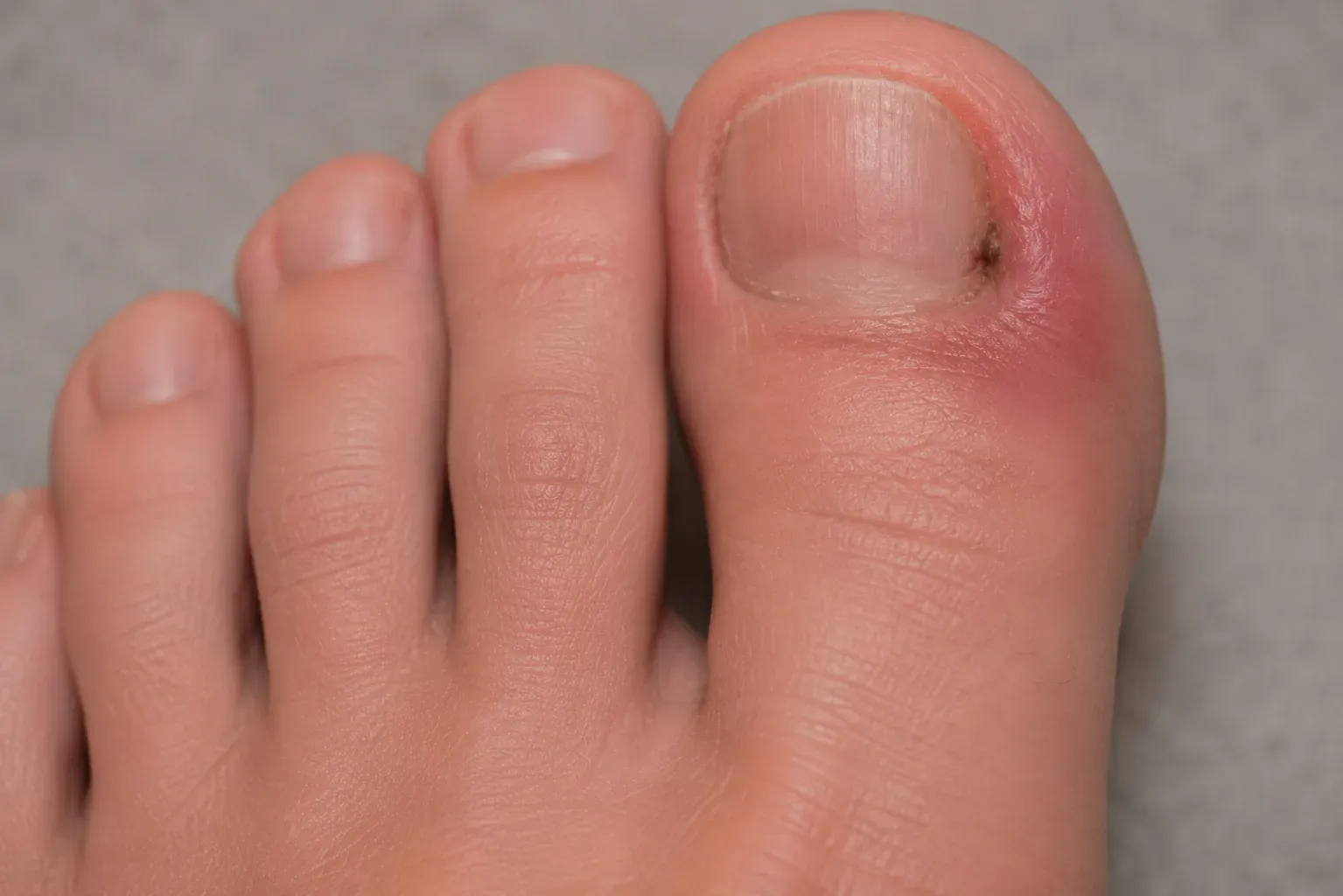
Every ingrown toenail is angry; not every one is infected. Here's the line, and what crossing it means.
Read the article →An ingrown toenail is a small problem with an outsized ability to ruin your week. A corner of nail spears the skin beside it, the toe swells, and every shoe becomes an enemy. Treatment is quick and done under full numbing, and for nails that keep ingrowing, a minor in-office procedure ends the cycle permanently.
A nail is supposed to glide over the skin as it grows. When an edge instead drives down into the nail fold, the body responds as it would to any embedded foreign object: swelling, tenderness, and often infection once bacteria join in. Big toes take the brunt because they absorb the most shoe pressure. Whether an episode is a one-off (a bad trim, a stubbed toe) or the start of a lifelong pattern usually comes down to the inherited curvature of the nail plate.
Spotting an ingrown nail takes no expertise; the useful questions are practical. Is the fold infected? Has this edge ingrown before? Does the nail's curvature predict it will keep happening? Dr. Galant also checks circulation and sensation, because they determine how the toe can safely be treated. The answers decide between a simple edge removal and a permanent correction.
A mild first episode earns a few days of warm soaks and roomy shoes. Anything past that (worsening pain, swelling, drainage, or a repeat performance from the same nail) belongs in the office, where it can usually be resolved the same visit. Two situations skip the waiting entirely: signs of infection, and any ingrown nail in someone with diabetes or poor circulation. And don't dig the corner out yourself; the spike left behind grows in deeper.
Call (201) 568-2100 promptly for: spreading redness or red streaking up the toe or foot; pus with fever; any ingrown nail if you have diabetes or poor circulation. Urgent foot problems are worked into the schedule faster.
Treatment starts with the simplest option likely to work and escalates only when needed.
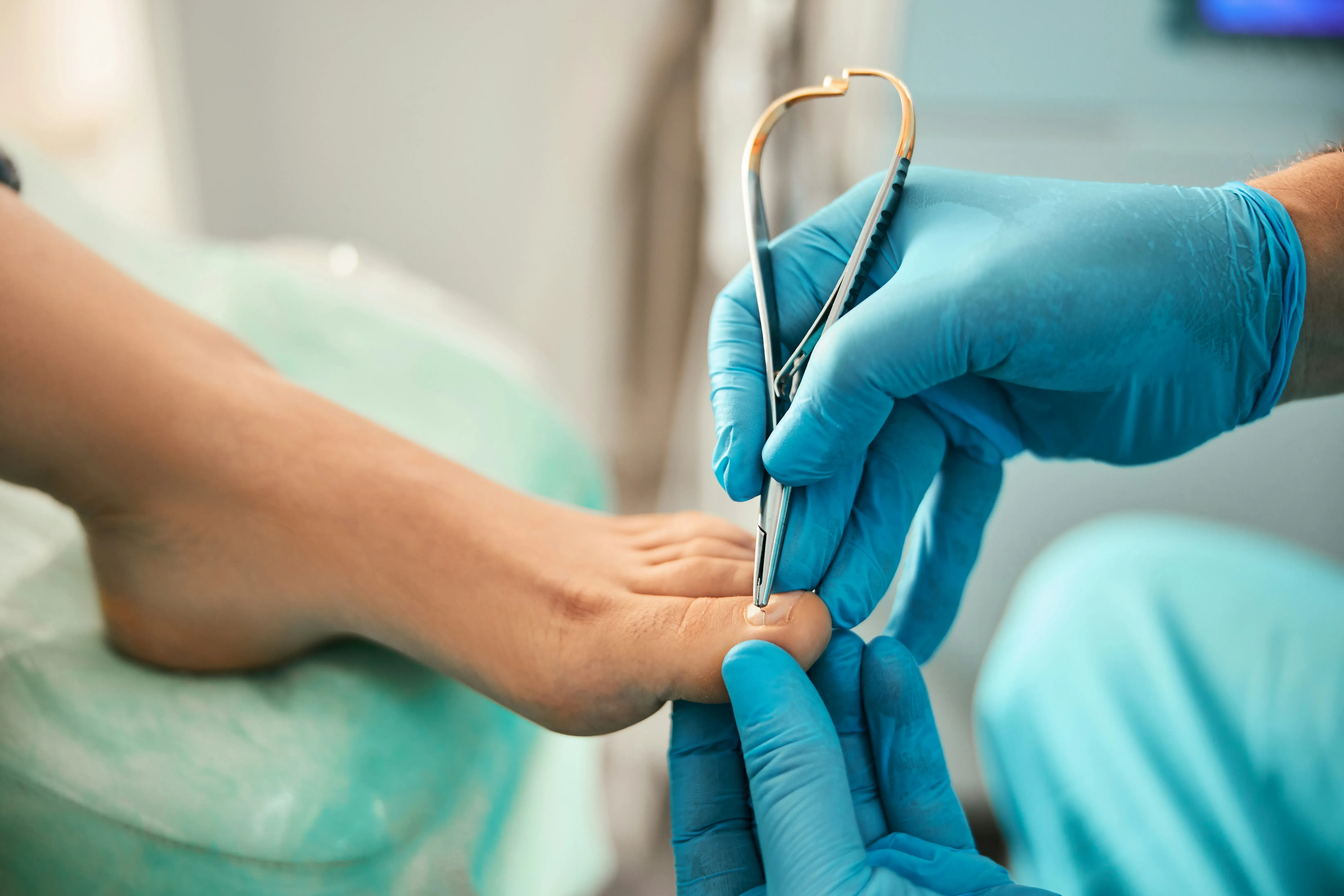
After a numbing block at the base of the toe (the only part you feel), the ingrown edge is freed and removed. The whole visit fits into a lunch break or an after-work slot, and the pressure relief is immediate.
An infected nail fold is drained and cleaned, with oral antibiotics added when redness has spread beyond the fold. Most infections settle quickly once the nail edge feeding them is gone.
For repeat offenders, a chemical is applied to the root of just the problem edge so that sliver of nail never regrows. It adds minutes to the procedure, carries a high permanent success rate, and leaves a nail that looks essentially unchanged, only slightly narrower.
Trim straight across and not too short, size shoes to your longest toe, and manage moisture. For kids and teens in cleats, a quick fit check each season prevents most episodes.
Yes. You walk out of the office, and most people return to normal activity the same day in a roomy shoe. Expect some soreness that evening once the anesthetic wears off; by the next day most patients are in regular shoes and wondering why they waited so long.
Cleats, growth spurts, and inherited nail curvature make teens frequent repeat patients. After the second or third episode on the same edge, permanent correction is worth discussing; it is safe for teenagers, ends the seasonal cycle, and beats treating an infected toe mid-playoffs. The office treats patients from childhood on, and evening and Saturday slots work around school.
A very early, mild episode can settle with soaks and pressure relief. Once the skin is broken or heaped, inflamed tissue has formed beside the nail, it will not, because the nail keeps growing into the injury it created. Each untreated episode also tends to be worse than the last.
Because a complete fix requires removing the nail edge back to its base, which is not tolerable on an awake toe, and partial trims done without anesthesia are exactly what leave the hidden spikes that come back worse. Full numbing takes seconds and makes the procedure itself painless.
Every ingrown toenail is angry; not every one is infected. Here's the line, and what crossing it means.
Read the article →Most ingrown toenails start with a trimming decision. The correct technique takes no extra time; it just takes knowing it.
Read the article →Four real options, very different success rates. An honest comparison before you spend another year on the wrong one.
Read the article →One visit at our Tenafly office gets you a diagnosis and a plan. Call (201) 568-2100 or book online.